
Retrofitting & Rehabilitation
Expert structural strengthening and repair solutions for existing buildings and infrastructure
Our Services
- Seismic Retrofitting
- Structural Strengthening
- Concrete Repair
- Foundation Underpinning
- Crack Repair & Injection
Techniques Used
Certifications
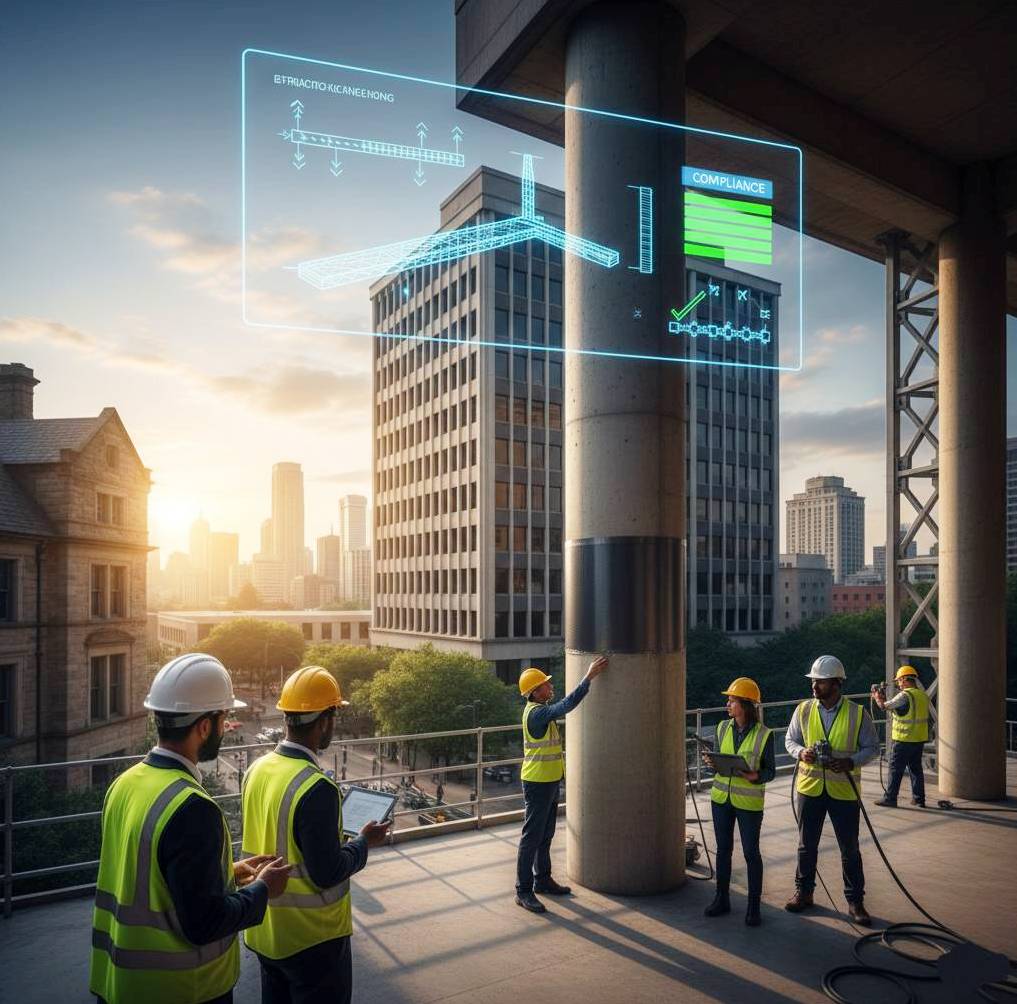
Dynamic Engineering & Consultancy provides comprehensive retrofitting and rehabilitation services to restore, strengthen, and upgrade existing structures. Our expertise helps extend the service life of buildings, improve their structural performance, and ensure compliance with current safety standards.
Whether your structure requires seismic upgrading, damage repair, or capacity enhancement, our team of specialists employs advanced techniques and materials to deliver sustainable and cost-effective solutions. We work on all types of structures including residential buildings, commercial complexes, industrial facilities, and heritage structures.
Service Types
Purpose: Upgrading structures to meet current codes and improve performance
Applications: Seismic strengthening, load capacity increase, code compliance
Benefits: Enhanced safety, extended lifespan, regulatory compliance
Purpose: Repairing damaged structures and restoring original capacity
Applications: Damage repair, corrosion protection, structural restoration
Benefits: Restored functionality, prevented further deterioration, cost savings
When is Retrofitting Needed?
Seismic Vulnerability
Structures designed before current seismic codes require strengthening for earthquake safety
Increased Loads
When building usage changes or additional floors are added, requiring higher load capacity
Structural Damage
Cracks, spalling, or deterioration due to aging, environmental factors, or accidents
Foundation Issues
Settlement, differential movement, or inadequate foundation capacity
Code Upgradation
Compliance with revised building codes and safety standards
Age & Deterioration
Natural aging process, corrosion, or material degradation over time
Our Retrofitting & Rehabilitation Process
Structural Assessment
Comprehensive visual inspection, non-destructive testing, and structural analysis to identify deficiencies and determine the extent of repairs needed.
Design Solution
Development of customized retrofitting strategy using appropriate techniques and materials. Detailed design calculations and drawings preparation.
Material Selection
Choosing the right materials (FRP, epoxy, micro-concrete, etc.) based on structural requirements, environmental conditions, and budget constraints.
Execution
Careful implementation of retrofitting measures with minimal disruption to building occupants. Quality control during construction phase.
Quality Assurance
Post-retrofitting evaluation, testing, and documentation to ensure the effectiveness of the strengthening measures.
Advanced Retrofitting Techniques
- FRP Wrapping: Carbon fiber or glass fiber reinforced polymer wrapping for column and beam strengthening
- Concrete Jacketing: Additional concrete layer with reinforcement for increased section capacity
- Steel Jacketing: Steel plate bonding or angle sections for moment capacity enhancement
- External Prestressing: External post-tensioning for flexural strengthening of beams and slabs
- Shear Wall Addition: New shear walls for improved lateral load resistance
- Base Isolation: Installation of seismic isolation devices for high-risk structures
- Foundation Underpinning: Strengthening existing foundations using micro-piles or jack piles
Rehabilitation Methods
- Epoxy Injection: For repairing cracks and restoring structural integrity
- Shotcreting/Guniting: Application of pneumatically applied concrete for surface repair
- Corrosion Protection: Cathodic protection, coating systems for steel reinforcement
- Concrete Repair: Patch repair, surface treatment, and protective coatings
- Waterproofing: Structural waterproofing to prevent moisture ingress
- Chemical Grouting: For soil stabilization and leak sealing
Case Study: Seismic Retrofitting of School Building
Challenge: A 30-year-old school building required seismic upgrading to meet current earthquake safety standards.
Solution: Implemented FRP wrapping for columns, added shear walls, and strengthened beam-column joints.
Result: Building seismic performance improved by 60%, ensuring student safety during earthquakes while minimizing disruption to academic activities.
Benefits of Professional Retrofitting
Enhanced Safety
Significantly improves structural safety against earthquakes, winds, and other hazards
Cost-Effective
More economical than demolition and reconstruction, extends building lifespan
Code Compliance
Ensures compliance with current building codes and safety regulations
Increased Value
Enhances property value and marketability with improved structural integrity
Minimal Disruption
Phased implementation allows continued building occupancy during retrofitting
Sustainable Solution
Environmentally friendly approach by extending life of existing structures
Why Choose Our Retrofitting Services?
- Expert Team: Qualified structural engineers with specialized retrofitting experience
- Advanced Techniques: Use of modern materials and methods like FRP, epoxy, etc.
- Comprehensive Approach: From assessment to design and execution supervision
- Quality Materials: Use of certified materials from reputed manufacturers
- Cost Optimization: Solutions tailored to budget constraints without compromising safety
- Timely Completion: Efficient project management ensuring minimal disruption
- Documentation: Detailed reports, calculations, and as-built drawings provided